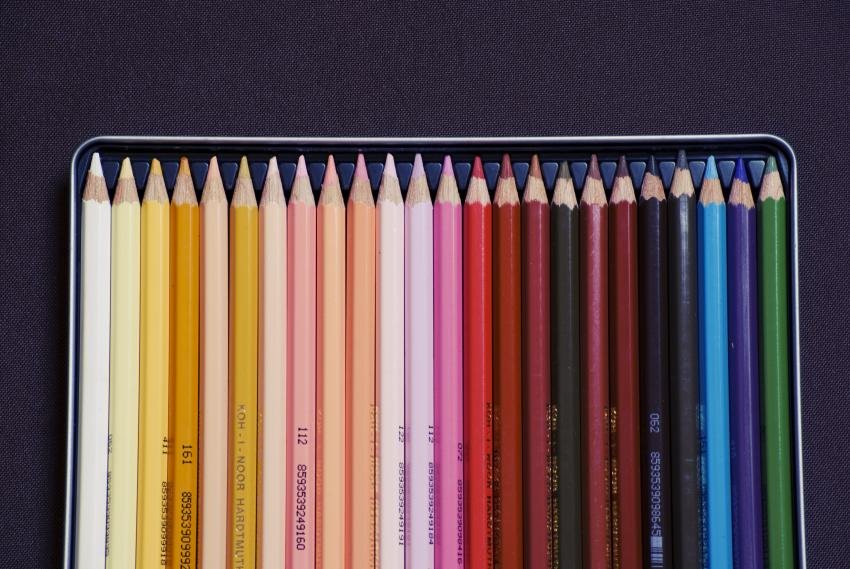
Crayons are usually our first coloring tool. Most of us have memories of sitting at kitchen tables as children, reaching into a box of Crayolas, snapping them in half, discovering the magic of color applied to paper. For many adults, crayons hold a special kind of nostalgia—they represent childhood creativity, freedom, and the pure joy of coloring without pressure or expectation. Somewhere along the way, though, most of us moved on to "adult" coloring tools like colored pencils and markers. Crayons got labeled as "just for kids," relegated to craft projects and occasional impulse purchases at art stores.
But here's the truth that most adult coloring enthusiasts don't realize: crayons are profoundly underrated as a coloring medium. They're not just for children—they're powerful tools for adult artists and coloring enthusiasts who understand their strengths and know how to use them effectively. When you approach crayons with intention, technique, and respect for what they offer, they become capable of creating beautiful, sophisticated, deeply satisfying coloring results.
Why Crayons Are Worth Using
They don't bleed through paper. Unlike markers, which can bleed through regular coloring page paper and require special marker paper, crayons are completely safe on any paper. This means you have freedom in your paper choices without worrying about your coloring medium destroying the reverse side of your page. This simple characteristic alone opens up many coloring possibilities.
They never dry out. Colored pencil tips can break. Markers can dry out if their caps aren't secured properly. But crayons? They sit in a box for months or years and remain perfectly usable. There's a reliability to crayons that other mediums can't match. This makes them perfect for people who color sporadically or who like to take breaks from their artistic pursuits—your crayons will be exactly as you left them when you return to coloring.
They require no special setup. You don't need sharpeners, special paper, protective sheets, or any additional supplies beyond the crayons themselves and whatever paper you choose to color on. Pick up crayons and a coloring page, sit down, and start coloring. That simplicity is powerful, especially in a world where creative pursuits often feel complicated and require expensive equipment.
They're forgiving and low-pressure. Because crayons are associated with childhood creativity, there's an implicit permission that comes with using them: permission to experiment, to make mistakes, to play. This psychological freedom translates into better coloring experiences. When you're not worried about "using the tool correctly," you're free to explore, to try techniques you might hesitate to attempt with more "serious" art supplies, and to enjoy the process rather than stressing about the product.
They're affordable. A basic box of 24 or 64 crayons costs just a few dollars. Even if you decide crayons aren't your preferred medium, you've invested almost nothing. This affordability means you can buy larger boxes, try different brands, and experiment without guilt or financial stress.
The Biggest Mistake: Pressing Too Hard, Too Fast
The single biggest mistake beginners make when coloring with crayons is pressing too hard with too much pressure, too early in the coloring process. It's understandable—when you're used to working with other mediums, your instinct might be to apply firm pressure to get dense color fast. With crayons, this approach backfires.
When you press too hard initially, you:
- Flatten the crayon tip, making subsequent coloring less precise and more difficult to control
- Deposit so much pigment so quickly that blending becomes nearly impossible
- Create a harsh, unrefined look that doesn't benefit from layering
- Potentially damage the paper through excessive pressure
- Fatigue your hand, making the coloring experience less enjoyable
Instead, approach crayon coloring like sketching with color. Use lighter pressure initially, let color build gradually through layers, and add more pressure only when you want to intensify color in specific areas. This approach gives you infinitely more control and creates significantly more refined, beautiful results. Think of your first pass with a crayon as establishing the overall color and shape. The second and third passes deepen and refine. The final passes, with more pressure, create the darkest values and most saturated areas.
This slower approach might feel counterintuitive at first, but it transforms the crayon coloring experience from frustrating to deeply satisfying. You gain control, achieve better blending, create more sophisticated color depth, and actually enjoy the process more because you're not fighting against your medium.
Pressure as a Tool for Creating Dimension
Once you understand the relationship between pressure and color saturation, pressure becomes a powerful design tool. Rather than using it destructively (pressing so hard you flatten the crayon and lose control), use it intentionally to guide viewers' eyes through your design and create dimension and interest.
Light pressure = soft, airy color: Apply light, almost caressing strokes where you want gentle color and soft transitions. This is perfect for backgrounds, distant elements, and areas where you want color to feel peaceful and calm.
Medium pressure = true color values: This is your standard coloring pressure—enough to get good color saturation without being destructively firm. Use this for most of your coloring work, where you want clean, true color without attempting dramatic effects.
Heavy pressure = bold, saturated areas: Save heavy pressure for areas where you want maximum color intensity, deepest values, and visual emphasis. Use it strategically to create focal points and to anchor designs with bold color.
Pressure gradation for shading: Create simple shading by using light pressure on areas that catch light and gradually increasing pressure as you move toward shadowed areas. For example, on a sphere or round object, use very light pressure at the highlight, medium pressure on the mid-tone, and heavier pressure at the darkest shadowed edge. The sphere suddenly looks three-dimensional, and you achieved that effect simply by varying pressure. No special blending tools or techniques required—just understanding how to use your crayon as a pressure-sensitive tool.
This pressure-based approach to shading is one of the most powerful techniques in crayon coloring. It's simple, intuitive, and creates surprisingly sophisticated results. Beginners often achieve shading effects with crayons that would require significant effort with other mediums.
Blending with Crayons
Many people assume crayons can't blend, but that's absolutely false. Crayons blend beautifully—the key is understanding how and being patient with the process.
Color wheel blending: Colors that are adjacent or similar on the color wheel blend smoothly with crayons. Layer a lighter crayon, then layer a slightly darker or shifted crayon on top. Work them together with medium pressure and light overlapping strokes. They naturally merge into a beautiful transition. For example, yellow over red creates a warm orange transition. Light blue over dark blue creates a gradient. Green over blue creates an aqua blend. These combinations work because the colors are related and naturally want to harmonize.
Blending with white crayon: One of the most powerful blending techniques is layering a white crayon over other colors and then burnishing (pressing firmly) where they overlap. The white crayon acts as a bridge, creating highlights while simultaneously softening the color beneath. This is especially effective on yellows, where a touch of white can create a bright, luminous highlight that feels like light itself is shining on the page.
Burnishing for smooth transitions: Once you've layered crayon colors, you can burnish them together by pressing firmly with a single color (often white, light cream, or a neutral tone) over the area. The pressure physically blends the layers, creating smoother transitions than layering alone. This technique requires slightly heavier pressure than normal coloring, but the results are worth it—suddenly your crayons look blended and refined.
Blending tools beyond the crayon: You can blend crayons using tools beyond the crayon itself. A tissue, cotton ball, or soft cloth can smooth transitions. A blending stump or even your finger can gently blend colors. The waxy nature of crayons makes them surprisingly responsive to these blending techniques. Experiment cautiously—you want to smooth and blend, not destroy the colors you've worked to build.
Embracing Crayon Texture
Unlike colored pencils, which can be burnished into smooth perfection, or markers, which create completely smooth coverage, crayons inherently leave texture. That waxy, slightly grainy appearance is part of the crayon aesthetic, not a flaw to be eliminated.
Rather than fighting this texture, embrace it. The texture of crayon work has warmth and character that smooth mediums can't replicate. It feels handmade, authentic, and personal. It speaks to the simplicity and honesty of the medium. A beautifully colored page with visible crayon texture feels crafted and intentional, not polished or sterile.
This is especially true for backgrounds and larger areas. Rather than attempting to create perfectly smooth, uniform color, allow the crayon texture to show. This texture becomes a design element—it's organic, it's real, it's beautiful. This permission to embrace texture, rather than fighting it, transforms crayon coloring from potentially frustrating to genuinely delightful. You stop trying to make your crayons behave like markers and start appreciating what they naturally offer.
Choosing the Right Crayons for Adults
Not all crayons are created equal. While basic Crayola crayons are inexpensive and perfectly functional for experimentation, adults interested in more sophisticated coloring results might want to explore options that offer better pigmentation, finer tips, or better blending characteristics.
Crayola Classic 64-Count: The standard choice, offering a wide range of colors at an extremely low price point. These crayons have good pigmentation and smooth color application. The standard size is comfortable to hold and control. This is an excellent entry point and remains a reliable choice even for experienced colorists who value simplicity and affordability.
Crayola Twistables: If sharpening feels annoying, Twistables offer a mechanical twist-up mechanism instead. No sharpener needed, and the fine tips allow for more precision than standard crayons. The reduced width makes them easier to handle for detailed work. Many adult colorists prefer these for the precision and convenience factor.
Crayola Portfolio Series: These premium crayons contain more wax and higher pigment concentration than standard Crayolas. Colors are richer, blending is smoother, and overall results feel more refined. The price is still reasonable, making this an excellent middle-ground option between basic Crayolas and expensive artist-grade crayons. If you've tried basic crayons and want to explore better quality without significant investment, Portfolio Series is an excellent choice.
Faber-Castell Jumbo Triangular Crayons: These artist-quality crayons offer excellent pigmentation, smooth application, and the triangular shape is ergonomic and prevents rolling off tables. The price is notably higher than Crayola, but if you're serious about crayon coloring, the improved quality is noticeable and worthwhile. These crayons blend beautifully and hold a fine point longer than basic crayons.
Your choice of crayons depends on your goals, budget, and how frequently you color. Beginners should start with basic Crayolas to learn the medium without financial investment. As you develop your technique and understand what you value in crayons, you can upgrade to premium options. There's no single "best" crayon—the best one is the one that brings you joy and facilitates your creative expression.
Crayons Are About Enjoyment
Ultimately, the most important thing about coloring with crayons is understanding what they offer: simplicity, accessibility, freedom, and pure enjoyment. Crayons aren't about creating museum-quality artwork. They're about the process, the meditation, the joy of sitting down without worrying about technique or perfection, and simply coloring.
That said, when you apply intention and technique to crayon coloring, you discover that crayons are far more capable than their reputation suggests. You can create beautiful shading, smooth blending, sophisticated color combinations, and results that you're genuinely proud to display. The key is patience, light pressure, layering, and respect for what the medium naturally offers.
If you haven't picked up crayons since childhood, I encourage you to give them another chance. Buy a box, sit down with one of our free coloring pages, and reconnect with the simplicity and joy of this humble medium. Start with light pressure, build color gradually, experiment with blending, and allow yourself to play without pressure or expectation. You might discover that crayons become a beloved part of your coloring practice—a tool you reach for not because you're trying to create something specific, but because the act of coloring with crayons brings you genuine peace and pleasure.
Building Your Coloring Practice
Regardless of which medium you choose, building a consistent coloring practice is about exploring different tools and techniques to find what resonates with you. Some colorists swear by colored pencils and their blending capabilities. Others prefer markers and their smooth coverage. Many find that a combination of tools—like layering markers and colored pencils—creates the best results.
Crayons should be part of this exploration. Don't dismiss them based on childhood memories or assumptions about what they can do. Instead, approach them with fresh eyes and an open mind. Experiment with pressure, layering, and blending. Discover what you can create with this simple, honest, beautiful medium.
For a complete overview of all the tools available to adult colorists, explore our guide to choosing the right coloring tool for your needs. Every tool has strengths and limitations. Crayons' strengths are accessibility, simplicity, and the pure joy of creating without complications. When you understand and appreciate those strengths, crayons transform from forgotten childhood supplies into legitimate, valuable tools in your coloring toolkit.
Frequently Asked Questions About Coloring with Crayons
Can you use regular Crayola crayons for adult coloring pages?
Yes — standard Crayola crayons work perfectly well on adult coloring pages. They don't bleed through paper, require no special setup, and the 64-count box covers a broad enough color range for most designs. For more refined results, the Crayola Portfolio Series offers richer pigment and smoother blending. But there's nothing wrong with starting with a basic box — many adult colorists use them regularly and love the results.
How do you blend crayons smoothly?
The key is light pressure and patient layering. Start with your lighter color using gentle strokes, then layer the second color on top with the same light pressure, overlapping in the transition zone. Once both colors are down, go back over the overlap with the lighter crayon using slightly more pressure — this burnishes the colors together. A white crayon applied firmly over the blended area smooths the transition further. See the blending section above for the full technique breakdown.
Do crayons bleed through coloring book paper?
No — this is one of crayons' biggest practical advantages. Unlike alcohol markers, crayons don't bleed through most paper, including standard coloring book pages. No bleed-proof sheet needed, no special paper required. You can color directly in any book without worrying about damaging the page behind it.
What's the difference between crayons and colored pencils for adult coloring?
Colored pencils have a harder, wax or oil-based core that comes to a finer point — better for detail work, tight spaces, and highly controlled blending. Crayons have a softer, thicker wax core that covers larger areas faster and feels more fluid and gestural. Colored pencils reward precision; crayons reward a looser, more expressive approach. Many colorists use both — crayons for bold fills and atmosphere, colored pencils for fine detail and edge work.
What are the best crayons for adult coloring?
For most adults, the Crayola Portfolio Series hits the best balance of quality and price — richer pigment and smoother blending than standard Crayolas, still very affordable. Faber-Castell Jumbo Triangular Crayons are the artist-grade choice if you want the best possible blending and point retention. If you just want to experiment before committing, a standard Crayola 64-count box is a perfectly valid starting point that many adult colorists never feel the need to upgrade from.
Are crayons good for detailed adult coloring pages?
They can be, with the right approach. Standard crayons have thicker tips, which makes very fine lines difficult. Crayola Twistables and artist-grade crayons sharpen to a finer point that handles moderate detail well. For very intricate linework, colored pencils are the better tool. Crayons shine in medium-to-large areas, backgrounds, and designs with bold shapes — use a colored pencil for the finest details if needed, and the two media complement each other naturally.