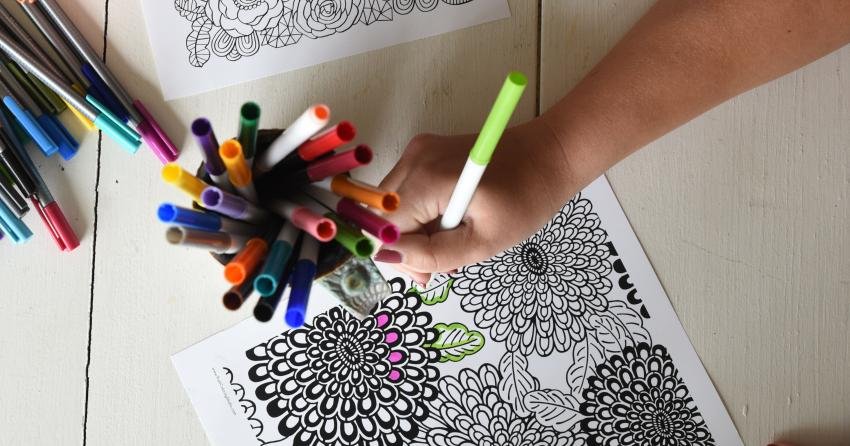
Walk into any art supply store and you'll find two very different types of markers on the shelf — alcohol-based and water-based. Both are popular with adult colorists, but they behave completely differently on paper and give very different results. Understanding how each type works will help you choose the right tool for your style, your budget, and the look you're going for.
Alcohol-Based Markers
Alcohol-based markers use an alcohol solution as the carrier for their pigment. Because alcohol evaporates quickly, these markers dry fast and blend extremely smoothly — almost like painting with liquid color. The ink is permanent once dry and tends to be highly saturated.
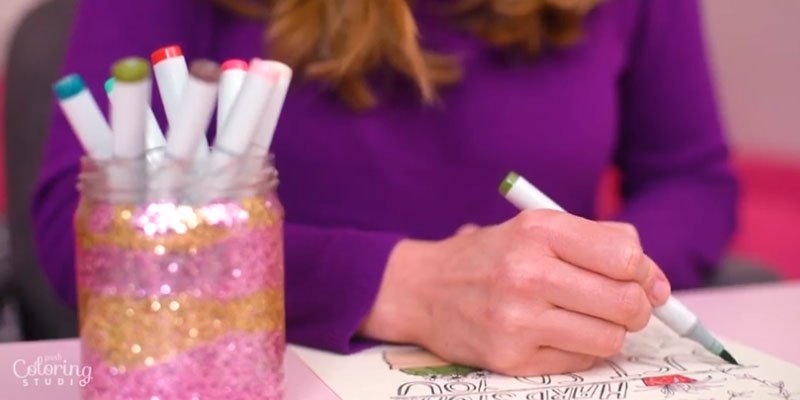
Popular Alcohol-Based Brands
- Copic — The professional's choice. Refillable, with 358 colors. Expensive but worth it for serious colorists. Available at copicmarker.com.
- Ohuhu — A highly rated budget alternative. Available in sets of 40–320 colors on Amazon.
- Arteza — Mid-range, widely available, good for beginners exploring alcohol markers.
- Prismacolor Premier Art Markers — Dual-tipped, rich pigment, popular in both illustration and coloring communities.
Pros of Alcohol-Based Markers
- Blend seamlessly — you can move the ink while it's still wet to create smooth gradients
- Dry quickly with minimal streaking
- Intensely vibrant, saturated colors
- Layerable — you can build up color depth without muddying
- Refillable nibs and ink (with Copic) — economical long-term
Cons of Alcohol-Based Markers
- Bleed through most papers — you need a bleed-proof or marker-specific sheet underneath
- More expensive upfront, especially Copic
- Mistakes are harder to fix — the ink is permanent
- Fumes can be strong in an unventilated space
Water-Based Markers
Water-based markers carry their pigment in a water solution. They're rewettable — meaning you can blend them with a damp brush even after they've dried — and they tend to be much more forgiving for beginners. Many water-based markers produce a soft, watercolor-like finish that's beautiful for florals, nature scenes, and anything you want to feel light and airy.
Popular Water-Based Brands
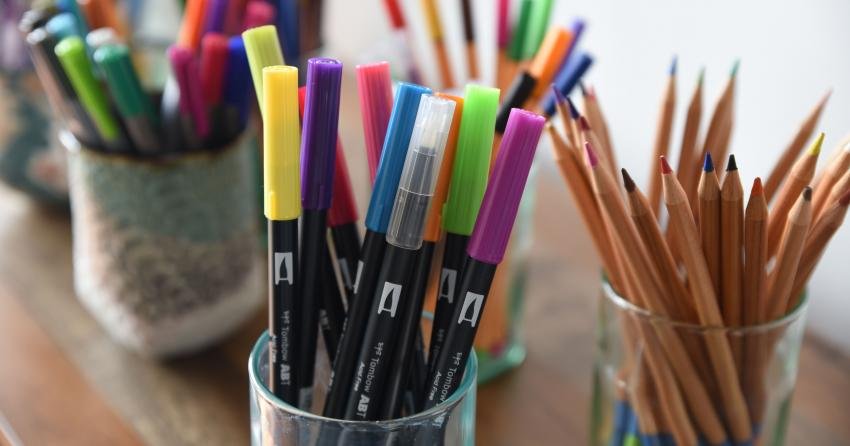
- Tombow Dual Brush Pen — The most popular water-based brush marker. Flexible brush nib + fine tip. Available in 108 colors. Shop on Amazon.
- Zig Clean Color Real Brush — Excellent for watercolor-style blending, with a very soft, flexible brush nib.
- Sakura Koi Coloring Brush Pens — Affordable, travel-friendly, watercolor quality.
- Crayola Super Tips — Budget-friendly and surprisingly versatile for casual coloring.
Pros of Water-Based Markers
- Beginner-friendly — mistakes can often be softened with a damp brush
- Can be blended with water for a watercolor wash effect
- Less bleed-through than alcohol markers
- Work on a wider range of papers
- Generally more affordable
- Less odor — safer in small spaces
Cons of Water-Based Markers
- Can cause lighter papers to buckle or warp if you use a lot of water
- Don't blend quite as smoothly as alcohol markers without practice
- Colors can appear lighter once dry than they looked when wet
Side-by-Side Comparison
| Feature | Alcohol-Based | Water-Based |
|---|---|---|
| Blending | Very smooth, seamless | Good with practice or water |
| Dry time | Fast | Moderate |
| Bleed-through | High — needs bleed-proof paper | Low to moderate |
| Beginner-friendly | Moderate | Yes |
| Price range | $$–$$$$ (Copic) | $–$$ |
| Best papers | Bristol, marker paper | Drawing paper, mixed media |
| Special effects | Smooth gradients, skin tones | Watercolor washes, soft florals |
Which Should You Choose?
If you're just starting out, water-based markers are the easier entry point. They're forgiving, affordable, and work on most paper. A set of Tombow Dual Brush Pens is one of the best investments a beginner colorist can make.
If you want the smoothest possible blends — particularly for skin tones, backgrounds, and large areas of color — alcohol markers are worth the extra investment. Start with a smaller set of Ohuhu or Arteza markers before committing to Copics.
And of course, many colorists use both. Water-based markers for soft, delicate areas and alcohol markers for bold, smooth fills. They're tools, not rules — experiment and see what you love.
Not sure where to start with your coloring supplies overall? Check out our guide to choosing the right coloring tool and our roundup of 11 must-have coloring supplies.
Frequently Asked Questions
Which type of marker is better for beginners?
Water-based markers are generally the better starting point. They're more forgiving — mistakes can often be softened or reworked with a damp brush — they work on most papers without bleed-through, and they cost significantly less. A set of Tombow Dual Brush Pens is one of the most recommended first marker purchases for adult colorists.
Can you layer water-based markers over alcohol markers?
Yes, with one important rule: apply alcohol markers first and let them dry completely, then add water-based marker details on top. Never do it the other way around — applying alcohol markers over fresh water-based ink will dissolve and smear the water-based color. The alcohol-first, water-second order is the safe approach.
Do alcohol markers smell?
Yes — alcohol markers produce fumes from the alcohol carrier. For casual, short sessions this is rarely a problem. For longer coloring sessions, work near an open window or in a well-ventilated room. Water-based markers produce little to no odor and are safe in any environment, making them the better choice for small spaces or around children.
What paper works best for alcohol markers?
Smooth Bristol board, dedicated marker paper, and Copic mixed-media paper are the top choices — all designed to resist bleed-through and produce smooth, consistent color. Standard coloring book paper, printer paper, and copy paper will allow bleed-through. When using alcohol markers in a coloring book, always slide a bleed-proof sheet between the pages. See our paper guide for specific product recommendations.
Are Ohuhu markers as good as Copic for adult coloring?
For adult coloring, Ohuhu delivers excellent results at a fraction of the price — typically $25–50 for a set of 120 colors versus $8–10 per single Copic. The blending technique is identical. The main advantages Copic offers are refillability, replaceable nibs, and a professionally calibrated 358-color system. For casual coloring and learning the alcohol marker technique, Ohuhu is a smart starting point.
Can water-based and alcohol markers be used in the same coloring piece?
Yes — many colorists use both in the same piece. A common approach is using alcohol markers for large base areas and smooth gradients, then adding fine detail work or watercolor-style washes with water-based markers on top. Let alcohol layers dry completely before applying water-based markers over them, and keep a bleed-proof sheet underneath throughout.