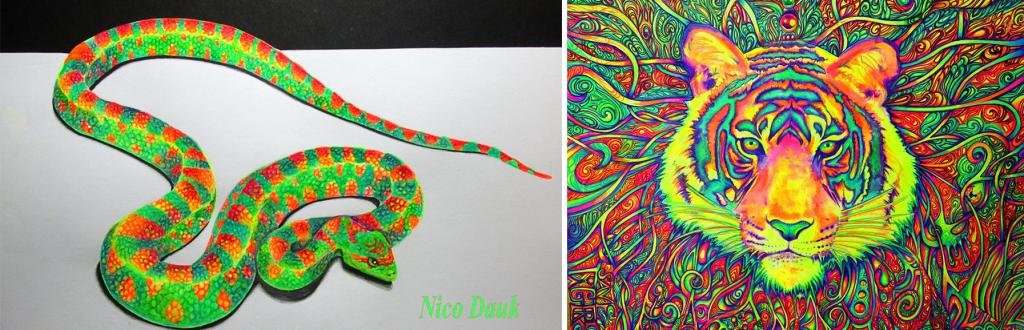
Gel pens aren't the easiest medium to blend. The ink is thicker than markers, dries faster than alcohol-based paints, and resists manipulation once it sets. But this doesn't mean blending is impossible. With the right techniques you can achieve beautiful, smooth transitions with gel pens—you just need to understand how gel ink behaves and work with it, not against it.
In this guide we'll walk through every blending technique that works with gel pens, from wet-on-wet to layering to using external blenders, so you'll have a full toolkit for achieving smooth color transitions in your gel pen coloring. If you're new to gel pens entirely, start with our complete Gel Pen Art guide first—it covers foundational technique before blending.
Why Gel Pens Are Tricky to Blend
Understanding gel ink's limitations helps you troubleshoot when blending doesn't work the way you expected.
Gel ink is thick. Gel ink has higher viscosity than marker ink. This makes it more opaque and color-rich—great for vibrancy but challenging for blending. Thick ink doesn't flow as easily, so it resists moving and merging with other colors.
Drying happens fast. Gel ink dries considerably faster than alcohol marker ink. You have a narrow window—usually 5–15 seconds depending on paper type—to blend before the first color sets. Once set, the ink resists manipulation.
Paper matters enormously. Porous paper absorbs gel ink quickly, collapsing your blending window. Smooth paper keeps ink on the surface longer, giving you more time to work. Paper choice dramatically impacts blending success. See our Best Paper for Coloring guide for specific recommendations.
The good news: These limitations aren't barriers—they're just different parameters. Work within them and you'll get beautiful results.
Technique 1: Wet-on-Wet Blending
This is the most straightforward blending approach. Apply the second color while the first is still wet, allowing them to merge at the boundary.
How to Execute Wet-on-Wet Blending
- Apply your first color: Fill a section with your base color using light pressure—a single smooth layer is ideal.
- Immediately apply the second color: Within 5–10 seconds while the first color is visibly wet, apply your second color adjacent to the first with slight overlap.
- Use circular motion at the blend point: Where the two colors meet, use small overlapping circles. Circular motion helps colors merge without visible streaks or harsh lines.
- Let it set: Once blended, leave it alone. Resist the urge to keep working it—additional manipulation disturbs the blend and creates streaks.
Color Combinations That Blend Best
Wet-on-wet blending works best with adjacent or analogous colors (neighbors on the color wheel):
- Blue into purple — adjacent hues, blend beautifully
- Yellow into orange — warm neighbors, smooth transitions
- Red into pink — close in value and hue, easy blending
- Purple into violet — similar undertones, merge effortlessly
Difficult combinations: blue to yellow, red to blue, orange to green. These are opposite on the color wheel and create muddy results when mixed directly. For challenging combinations, blend through an intermediate color—blue → purple → red rather than blue straight to red.
Technique 2: The Colorless Blender Pen
A colorless blender pen is a specialized tool that pushes colors together chemically. It's less demanding than wet-on-wet because you have slightly more working time—the blender pen keeps ink workable longer than it stays naturally wet.
How to Use a Colorless Blender Pen
- Apply two colors side by side: Place your first color on one side, leave a small gap (roughly the width of a gel pen line), then place your second color. Unlike wet-on-wet, they don't need to overlap yet.
- Fill the gap with the blender pen: The blender pen contains a neutral gel that dissolves both colors and encourages them to flow toward each other.
- Use circular motion toward the center: With light pressure and circular motion, gradually work the blender pen in both directions, pulling each color toward the middle.
- Allow to blend: The blender pen naturally merges the adjacent colors. The result is softer than wet-on-wet because a third medium is facilitating the merge.
- Stop when it looks complete: Continued manipulation after the blend sets disrupts the gradient.
Best Colorless Blender Options
- Tombow Dual Brush Colorless Blender—Most affordable, widely available, works well with most gel pen brands. The brush tip gives good control over blend placement.
- Prismacolor Colorless Blender Marker—Quality intermediate option, excellent value-to-performance ratio. Less expensive than Copic.
- Copic Colorless Blender (C-0)—Premium quality with the best blending results. Worth it if you blend frequently with Copic or high-end gel pens.
Advantages of This Method: Longer working window than wet-on-wet (20–30 seconds), more control over blend placement, works with challenging color combinations, produces soft smooth gradients, and requires less timing precision.
Technique 3: Dry Layering for Optical Blending
This technique doesn't blend the inks physically. Instead, you layer colors and allow the eye to blend them visually. It's the most forgiving method and works on any paper type—no timing pressure at all.
How to Dry Layer
- Apply your first color completely: Fill the entire area with your base color. Allow it to dry completely (30–60 seconds).
- Stipple the second color over the first: Using tiny dots (stippling technique) rather than solid fills, partially cover the first color. Dots should be small enough that individual dots become invisible at normal viewing distance but numerous enough to affect color perception.
- Step back and assess: From normal viewing distance, the two colors blend optically. Up close you see dots; at distance you see a blended color.
- Add additional layers if needed: A third stippled color creates even more complex gradients and depth.
This technique is especially powerful with metallic gel pens—stippling metallic colors over a regular color base creates luminous effects impossible with direct blending. See our Metallic Gel Pens guide for the full approach.
Advantages: Works on any paper type, no time pressure, forgiving (mistakes just add more color), allows complex color combinations, creates unique textural effects.
Disadvantages: More labor-intensive than wet blending, not suitable for smooth gradients (close-up viewing shows the dots), takes longer with multiple drying layers.
Technique 4: Water Brush Activation
For water-soluble gel pens—not all are water-soluble, so check your brand—a water brush can activate and blend the ink like a watercolor wash.
Which Gel Pens Work?
Always test on scrap paper first. Apply a slightly damp water brush to a dried gel color—if the ink dissolves or spreads, you have a water-soluble pen. Typically water-soluble options include Staedtler Triplus Gel pens and some (but not all) Sakura Gelly Roll variants.
How to Blend with a Water Brush
- Apply two adjacent gel colors: Still wet or just slightly drying—don't let them dry completely.
- Use a slightly damp (not dripping) water brush: Excess water damages paper and floods the color.
- Lightly brush across the blend line: Use gentle strokes, not pressure. The brush encourages wet ink to flow—don't scrub.
- Allow to dry: The blended area sets as excess water evaporates.
Best paper for this method is watercolor paper—Arches 140lb hot-pressed watercolor paper (smooth) produces cleaner blends than cold-pressed (textured). This technique is wonderful for mixed media work combining gel pens with watercolor.
The Circular Motion Technique: Foundation for All Blending
Circular motion is essential for smooth gel pen coloring, and it sets up successful blending regardless of which technique you use. It's important enough to deserve its own section.
Why it matters: Long straight strokes with gel pens create visible lines and uneven color saturation. Circular motion distributes ink evenly and prevents visible directional marks—the result looks more like a fill and less like pen strokes.
How to execute: Use small overlapping circles, each roughly pea-sized or smaller. Overlap each circle slightly as you move across the area for complete coverage. Keep pressure light and consistent, and add fresh ink frequently rather than stretching existing coverage. Dry strokes drag and streak.
When your base fill uses circular motion, the texture of your entire color area is compatible with circular blending strokes at the boundary, making wet-on-wet and blender-pen blending integrate more naturally.
Common Blending Mistakes to Avoid
| Mistake | What Happens | The Fix |
|---|---|---|
| Trying to blend dry ink | Dry gel ink doesn't move or merge—you get a hard line | Blend while visibly wet (wet-on-wet) or use a colorless blender pen |
| Pressing too hard | Heavy pressure concentrates ink, causes pooling and blotching | Light, consistent pressure—let the pen do the work |
| Using rough paper | Textured paper absorbs ink instantly, zero wet-blending window | Use smooth coated paper, watercolor paper, or marker pad |
| Expecting alcohol marker results | Frustration when gel blends don't look effortlessly smooth | Adjust expectations—gel blending is achievable but requires more technique |
| Over-working a blend | Continued manipulation after ink sets creates streaks and disturbs gradient | Stop when the blend looks complete and trust your work |
Recommended Supplies for Gel Pen Blending
Best Gel Pens for Blending
Not all gel pens blend equally. These are the most reliable for smooth blending:
- Sakura Gelly Roll—The industry standard. Consistent ink flow, reliable blending performance, widely available in 30+ colors. First choice for wet-on-wet technique.
- Pentel Sunburst—Excellent smooth gel pen with great ink flow. Slightly longer wet window than most gel pens. Good for blending, especially metallic colors.
- Shuttle Art Gel Pens—Best value if you want a large color set for practicing blending without worrying about using up expensive pens. Performance is solid for the price.
Best Blender Pens
- Tombow Dual Brush Colorless Blender—Best for most colorists. Affordable, accessible, reliable.
- Prismacolor Colorless Blender Marker—Great middle option.
- Copic C-0 Colorless Blender—Premium pick for serious blending work.
Best Paper for Blending
- Arches 140lb Hot-Pressed Watercolor Paper—Premium. Best for water brush technique and high-quality blending.
- Canson XL Marker Pad—Affordable, smooth, excellent for all gel pen blending techniques.
- HP 32lb Bright White Premium Choice Paper—Budget-friendly, surprisingly good for wet-on-wet and colorless blender technique.
Which Technique Should You Start With?
For best results with the most forgiveness: use the colorless blender pen technique. Longer working window, more control, beautiful soft gradients.
For the smoothest blends: wet-on-wet on coated paper with analogous colors. Requires practice and proper color selection but results are exceptional.
For any paper type without time pressure: dry layering (optical blending). Most forgiving technique overall.
For mixed media and unique textural effects: water brush activation with water-soluble gel pens on watercolor paper.
Start with the colorless blender method (most forgiving), practice wet-on-wet as your skill increases, and experiment with layering and water brush as you grow comfortable. Each method has real strengths and will serve you in different contexts—having all four in your toolkit makes you a much more versatile gel pen colorist.
For more on the broader world of gel pens, explore our Gel Pen Art guide, our Metallic Gel Pens review, and our 11 Must-Have Coloring Supplies list. And when you're ready to apply these blending techniques, our free coloring pages give you plenty of designs to practice on.
Related Articles
- Gel Pen Art: Complete Guide to Coloring with Gel Pens
- Metallic Gel Pens for Coloring: Full Review & Techniques
- How to Blend Colored Pencils
- White Pencil Blending Technique
- Best Paper for Markers and Colored Pencils
- 11 Must-Have Coloring Supplies
- How to Choose the Right Coloring Tool
- Browse Our Free Coloring Pages