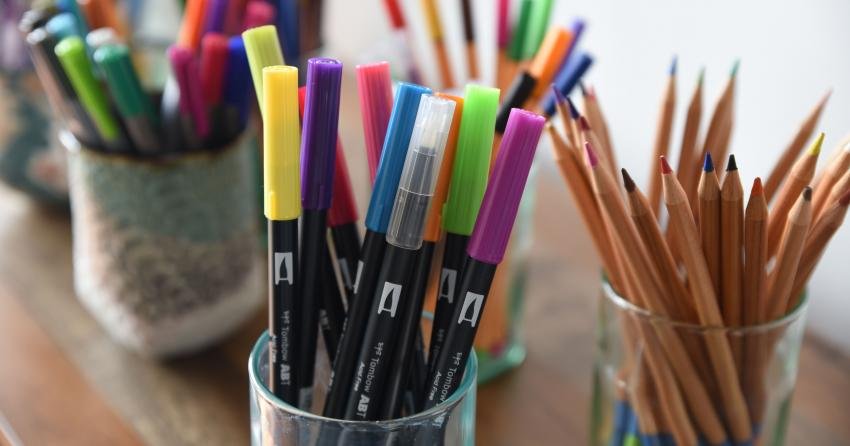
Brush pens sit in the most satisfying corner of the adult coloring supply world. They have the expressive, pressure-sensitive feel of a paintbrush — press lightly and you get a delicate fine line, press hard and you get a bold, broad stroke — but with the convenience and clean handling of a pen. No water jar, no cleanup, no dried brushes. Just pick up and color.
The best brush pens for adult coloring aren't all the same, though. Tombow, Faber-Castell, and Sakura each have meaningfully different ink formulations, tip characteristics, and ideal use cases. Here's how they stack up, including our actual paper test results for the Faber-Castell PITT pens.
What to Look for in a Brush Pen
Before jumping to specific picks, here's what actually differentiates brush pens in use:
- Tip material: Nylon tips are more durable and bounce back after hard pressure. Felt tips are softer and wear down faster, but some artists prefer their drag.
- Ink type: Water-based inks are blendable with a water brush or blender pen and have less bleed-through. India ink/pigment-based inks are waterproof and permanent but bleed through lighter papers more readily.
- Tip flexibility: A more flexible tip responds more dynamically to pressure changes. A stiffer tip gives more control but less expressive range.
- Color range: For adult coloring, you want at least 24 colors; 48+ is ideal for realistic shading and gradients.
- Dual-tip design: Pens with both a brush tip and a fine tip give you two tools in one — the brush for fills, the fine tip for detail and outlining.
Tombow Dual Brush Pens — Best Overall for Adult Coloring
Tombow Dual Brush Pens are our top pick for adult coloring without hesitation. The brush tip is made from soft nylon — flexible enough to lay down broad, sweeping strokes but fine enough at the very tip for delicate lines. The other end has a firm 1mm bullet tip for detail work, outlines, and tiny spaces the brush tip can't reach cleanly.
The water-based ink is the key to what makes Tombow pens so versatile in a coloring context. Two colors placed next to each other while still wet can be blended directly on paper — a third Tombow (the colorless blender) stroked across the wet boundary pushes the colors into each other for a seamless gradient. You can also load a water brush with a small amount of Tombow ink to paint soft washes over the top of existing color. The technique is genuinely similar to watercolor painting.
Tombow pens perform well on quality copy paper (28lb or heavier) with minimal bleed-through, and excellently on marker paper or cardstock. The 96-color range includes clean primaries, extensive neutrals, and enough earth tones to shade botanical designs realistically. Individual replacement pens are available so you can replenish colors without buying whole sets.
| Feature | Rating |
|---|---|
| Tip flexibility | Excellent |
| Blendability | Excellent |
| Bleed-through (quality paper) | Low |
| Color range | 96 colors |
| Tip durability | Very good |
| Price per pen | ~$2.50 |
View Tombow Dual Brush Pens on Amazon — available in themed sets of 6, 10, 20, and 96.
Faber-Castell PITT Artist Brush Pens — Best for Permanence
Faber-Castell PITT pens take a different approach: instead of blendable water-based ink, they use India ink — permanently waterproof, lightfast, and acid-free. The result is archival-quality color that won't bleed or lift if you paint over it with watercolors or Tombow pens. For artists who layer media or want finished pieces that will last, PITT pens are the professional choice.
The nylon brush tips are notably resilient. We applied hard pressure repeatedly and the tip always bounced back to its original shape — no fraying, no permanent flattening. Each pen is labeled with a name and number, and the barrel and cap match the ink color exactly, making organization easy. The insider trick for maximizing their lifespan: use tweezers to flip the nib 180 degrees when one end wears down, effectively doubling how long each pen lasts.
Paper Test Results
We tested PITT pens on three paper types that adult colorists commonly use:
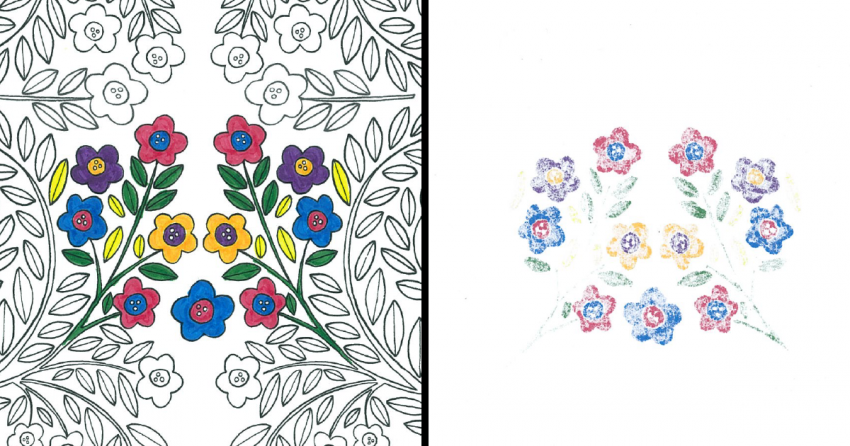
20lb copy paper: Significant bleed-through — the ink soaks through clearly enough to show on the back of the page. The colors look vibrant on the front and the nylon tips handled fine detail on flower stems and petals effortlessly, but standard copy paper is not the right choice with these pens. Put a blank sheet underneath to protect whatever is beneath.
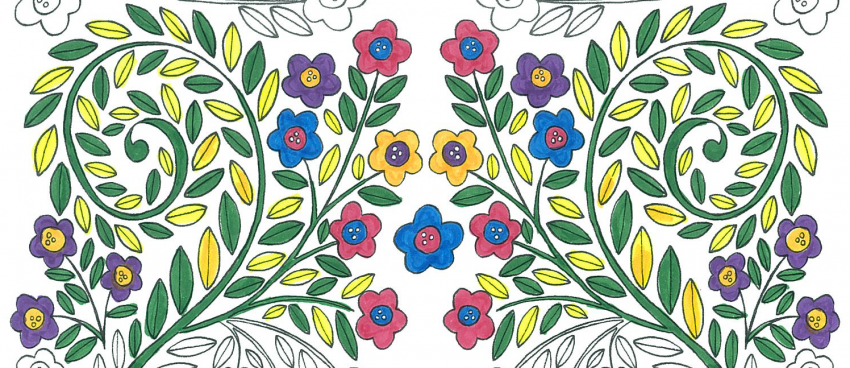
28lb digital copy paper: Significantly better. Bleed-through is minimal, colors are bright and even, and — notably — no pilling at all from the nylon tips. This is a problem we've encountered with almost every other brush pen we've tested, so it's a meaningful advantage. The paper didn't pill even under repeated strokes. Colors appeared slightly blotchy in some areas (particularly purple and blue), but this is a paper limitation rather than a pen problem.
Double-sided coloring book: Not recommended. The ink bled through just enough to show on the back side — a problem for anyone who doesn't want to waste half their book. If you color in double-sided books, slip a piece of cardstock between pages before you start. If you have a single-sided book, PITT pens are excellent.
| Feature | Rating |
|---|---|
| Ink permanence | Waterproof, lightfast |
| Tip durability | Excellent |
| Bleed-through (20lb paper) | High |
| Bleed-through (28lb+ paper) | Low |
| Pilling | None |
| Color range | 60+ colors |
| Price per pen | ~$2–3 |
View Faber-Castell PITT Pens at Blick — sets starting around $10 for 6 pens, up to 60-color sets.
Sakura Koi Coloring Brush Pens — Best for Watercolor Effects
Sakura Koi brush pens occupy a unique space: they're water-soluble brush pens that behave like a cross between a marker and a watercolor paint. The ink is vibrant when applied directly, but touch the tip with a wet brush or draw over it with a water brush pen and the color dissolves into a soft, painterly wash. For artists who love the look of watercolor but want the convenience of a pen, Koi pens are excellent.
The nylon tips are flexible and responsive, the 24-color set covers a good range of hues, and the transparent ink quality (rather than opaque) means colors layer naturally and build depth well. They're particularly beautiful on botanical designs and loose, expressive styles. Less ideal for bold, saturated fills on large areas — the watercolor-adjacent quality means coverage is more diffuse than with Tombow or PITT pens.
Sakura also makes a Colorless Blender for Koi pens that lets you blend two adjacent colors together on paper — push the blender across the wet edge of two colors and they merge smoothly. The effect is similar to Tombow blending but with a slightly more watercolor-like result.
View Sakura Koi Brush Pens on Amazon — around $30 for 24 pens.
Head-to-Head Comparison
| Pen | Ink Type | Blendable | Waterproof | Best For |
|---|---|---|---|---|
| Tombow Dual Brush | Water-based | Yes (direct + blender) | No | Blending, gradients, mixed media |
| Faber-Castell PITT | India ink | No | Yes | Archival work, layering media |
| Sakura Koi | Water-soluble | Yes (with water brush) | No | Watercolor effects, loose styles |
Paper Makes a Huge Difference
The right paper is as important as the pen itself. For brush pens, the minimum we'd recommend is 28lb copy paper for casual coloring. For better results, 65–80lb cardstock or marker-specific paper delivers noticeably improved color vibrancy and eliminates bleed-through. Smooth-finish papers produce the most even color; textured papers give a more painterly look but can cause the brush tip to skip slightly.
For a full breakdown of paper choices for different media including brush pens, markers, and colored pencils, see our guide to the best paper for adult coloring.
Brush Pen Techniques Worth Knowing
Pressure variation: Practice deliberate pressure changes mid-stroke — start light, press through the middle of the stroke, and release at the end. This creates a line that tapers at both ends like a calligraphy stroke and adds visual energy to fills.
Quick fills: For filling medium-sized areas, use the side of the brush tip rather than the point. Hold the pen at a lower angle and use broad, sweeping strokes. Much faster than trying to fill with the tip.
Blending while wet: With Tombow pens, work quickly while the ink is still wet. Two colors can be blended directly on the page by overlapping them with the brush tip; alternatively, use the colorless blender pen to push color from one section into another. Slow, careful blending gives you more control than rushing.
Mixing with other media: Brush pens layer well with colored pencils — use the brush pen for broad color fills, then add texture, detail, and shading with Prismacolor pencils on top. For more on building a mixed-media coloring workflow, read our guide to choosing the right coloring tool for every project.
Ready to try brush pens? Browse our free printable coloring pages — floral designs, botanical illustrations, and nature scenes are all ideal for brush pen techniques. Check out our complete list of 11 must-have coloring supplies to see how brush pens fit into a full toolkit.