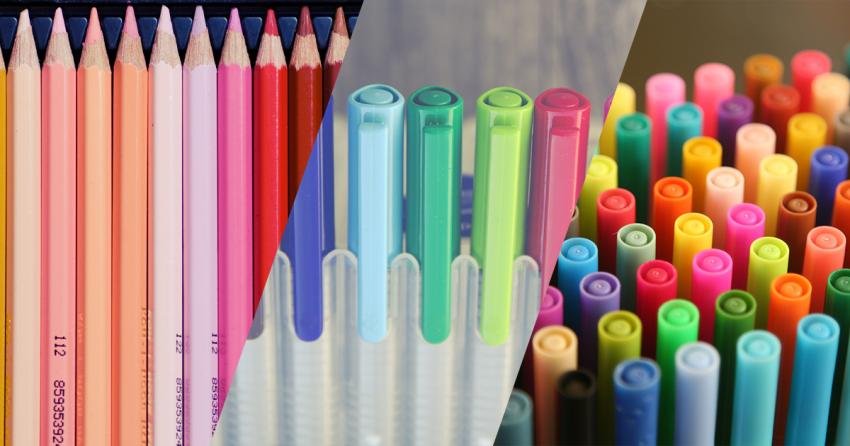
The single fastest way to level up your coloring? Stop grabbing whatever is closest and start matching your tool to your project. Colored pencils, alcohol markers, brush pens, gel pens, and fineliners each behave completely differently on paper — and understanding those differences is what separates a flat, frustrating result from a piece you actually want to hang on the wall.
This guide breaks down every major category of adult coloring supplies, tells you exactly what each is best at, flags its limitations, and points you toward specific products worth buying. Whether you're building your first kit or deciding what to reach for next, this is your starting point.
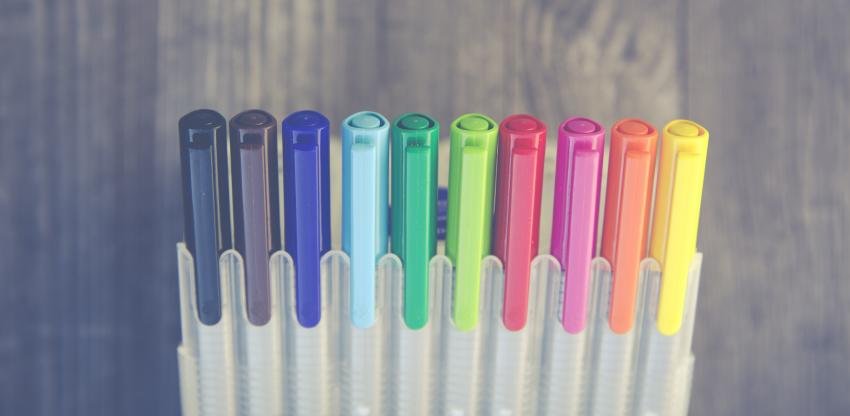
Colored Pencils
Colored pencils are the most forgiving medium in adult coloring. They blend beautifully, they're erasable to a degree, they don't bleed through paper, and they give you precise control over light-to-dark gradients. If you're new to coloring or you prefer a soft, painterly look, pencils should be your foundation.
The three main types break down like this:
Wax-based pencils (like Prismacolor Premier) have a soft, creamy core that's ideal for layering and blending. They build up rich color quickly, but heavy layering can cause a waxy buildup called "wax bloom" — a slight haze that appears on finished work. A light buff with a soft cloth takes care of it.
Oil-based pencils (like Faber-Castell Polychromos) have a slightly harder, drier core. They hold a sharper point longer, which makes them excellent for fine detail and line work. They're also more resistant to breakage when dropped. Many advanced colorists use oil pencils for detail on top of wax pencil basecoats.
Watercolor pencils (like Faber-Castell Albrecht Dürer) can be used dry like a regular pencil or activated with water to create soft, watercolor-like washes. They're fantastic for backgrounds and loose, painterly effects. See our full guide to watercolor pencils for techniques.
When it comes to blending colored pencils, a colorless blender pencil, blending stump, or even a white pencil can smooth transitions dramatically. Check out our article on using a white colored pencil for blending for details on that technique.
Best for: detailed designs, intricate patterns, soft gradients, layered shading, mixed media base layers.
Not ideal for: bold, saturated fills on large areas (takes a long time); very vibrant neon or metallic effects.
Alcohol-Based Markers
Alcohol markers produce the most vibrant, saturated color of any coloring tool. They blend seamlessly when layered wet-on-wet, dry fast, and can create professional illustration-quality results. They're the go-to for bold fills, gradient skies, skin tones, and anything where you want punchy, even color.
The trade-off is bleed-through — alcohol ink soaks through most paper, so you need marker-specific paper or a thick cardstock underneath to protect your work surface. They're also not cheap: a full set of professional-grade markers is a real investment.
Popular options at different price points:
- Copic Sketch — the industry standard for professionals. Refillable, replaceable nibs, 358 colors. Expensive upfront but the most economical long-term. Our full Copic markers guide for beginners covers everything you need to know.
- Ohuhu Alcohol Markers — a budget-friendly alternative with 320 colors, dual tips, and surprisingly smooth blending. Great for beginners who want to learn before investing in Copics.
- Prismacolor Premier Markers — double-ended with a fine tip and a chisel tip. Good color range and blendability at a mid-range price.
Want to know more about how alcohol markers differ from water-based options? Read our alcohol vs. water-based markers comparison.
Best for: bold color fills, gradient backgrounds, illustration-style coloring, skin tones.
Not ideal for: intricate detail work; use on regular printer paper without protection underneath.
Brush Pens
Brush pens sit somewhere between markers and paintbrushes. They have a flexible nylon or felt tip that responds to pressure — press lightly for fine lines, press hard for broad strokes. That pressure sensitivity makes them fantastic for expressive coloring, hand lettering within designs, and creating line variation that flat markers can't achieve.
The two most popular options in adult coloring are:
- Tombow Dual Brush Pens — water-based, dual-ended (brush tip + fine tip), blendable with water or a colorless blender. 96 colors. One of the best brush pens for adult coloring because the ink is water-activated, reducing bleed-through on quality paper.
- Faber-Castell PITT Artist Brush Pens — India ink-based, waterproof, lightfast. The nylon tips bounce back after heavy pressure and the colors are archival-quality. We ran a full paper test review of these brush pens if you want the details.
- Sakura Koi Coloring Brush Pens — water-soluble, blendable with a water brush, 48 colors. Excellent for both fill work and soft watercolor-style effects.
Best for: expressive fills, hand lettering details, calligraphy-style flourishes, varied line weight.
Not ideal for: ultra-fine detail (use a fineliner for that); heavy bleed-prone paper.
Gel Pens
Gel pens are the most overlooked tool in adult coloring, and also one of the most fun. The thick, pigment-rich gel ink sits on top of other media — which means you can draw over colored pencils or markers with a gel pen to add metallic shimmer, glitter sparkle, or opaque white highlights. That layering capability is something no other tool can replicate.
Gel pens come in colors you simply can't get any other way: true metallics (gold, silver, copper, bronze), neons that glow under black light, glitter, and pastel opaques. They're also fine enough for detail work — most have a 0.5–1.0mm tip.
The challenge is consistency: gel ink can skip, blob, or dry out mid-stroke. Coloring in small circular motions (rather than back-and-forth lines) dramatically reduces streaking. See our complete gel pen art guide for techniques and the best pens to buy.
Top picks:
- Sakura Gelly Roll — the benchmark for white gel pens and opaque colors. Smooth, consistent, and genuinely opaque on dark paper.
- Pentel Sunburst Metallic Gel Pens — rich metallic ink in gold, silver, and eight other shades. Excellent for mandala accents.
- Shuttle Art 120-Color Gel Pen Set — covers glitter, neon, metallic, and pastel in one kit. Great value for building a comprehensive collection.
Best for: accents and highlights on top of other media, metallic and glitter effects, white highlights on dark paper, fine detail work.
Not ideal for: filling large areas quickly; some inks take a moment to dry and can smear.
Fineliner Pens
Fineliners are the precision tool of the coloring world. With tips ranging from 0.05mm to 0.8mm, they excel at stippling, hatching, crosshatching, and adding crisp outlines or minute detail that would be impossible with any other medium.
They're not typically used to fill large color areas, but they transform a colored pencil or marker base layer when used to add texture on top. A few well-placed stipple dots or cross-hatched shadows can make a colored design look like a professional illustration.
- Staedtler Triplus Fineliner — 0.3mm tip, 36 vivid colors, and the legendary cap-off durability (they won't dry out even if left uncapped for days). A must for any coloring toolkit.
- Sakura Pigma Micron — archival, waterproof, fade-proof. The go-to fineliner for outlining on top of watercolor or markers without bleeding.
Best for: fine detail, stippling, hatching, outlining, tiny spaces.
Not ideal for: large fills; expressive or gestural marks.
Side-by-Side Comparison
| Tool | Blendability | Detail | Vibrancy | Bleed Risk | Best For |
|---|---|---|---|---|---|
| Colored Pencils | Excellent | High | Medium | None | Layering, gradients |
| Alcohol Markers | Excellent | Medium | Very High | High | Bold fills, illustration |
| Brush Pens | Good | Medium | High | Medium | Expressive strokes, lettering |
| Gel Pens | Low | High | High (metallics) | Low | Accents, highlights |
| Fineliners | None | Very High | Medium | None | Detail, stippling, lines |
What About Mixing Media?
Some of the best coloring results come from combining tools — and there's an art to the order you layer them. A few tried-and-true combinations:
- Colored pencil + gel pen: Build your base color with pencils, then add metallic or glitter gel pen accents on top. The gel ink sits right on the pencil pigment without disturbing it.
- Alcohol marker + colored pencil: Lay down smooth, even marker fills for the base, then use colored pencils to add shading, texture, and fine details. The pencil grips the dry marker ink well.
- Watercolor pencil + brush pen: Use watercolor pencils for the painted wash base, then add expressive strokes or lettering with a brush pen once dry.
- Any base + fineliner: Once any colored layer is fully dry, go over it with a Pigma Micron to add crisp lines, stippling shadows, or decorative hatching.
If you're not sure where to start, read our guide to the 11 must-have coloring supplies for adults — it covers the specific products worth buying in each category. And when you're ready to practice, browse our free coloring pages — we have thousands of designs across every style and complexity level.
The best coloring tool is always the one that fits your project — and your patience level. Start with what excites you, learn it well, and layer in new media one at a time. That's how a hobby becomes a craft.